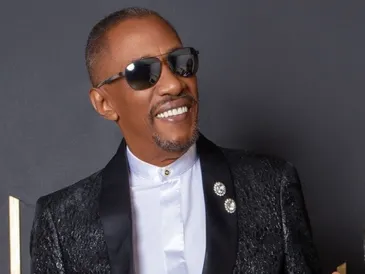
Co-founder of Magnum Band, former member of Tabou Combo, and one of Haiti’s most beloved musicians, Dadou Pasquet died peacefully at the age of 72 after a long illness, leaving behind a legacy etched into the very heartbeat of Haitian music.
Haiti and its diaspora woke this morning to news that left no heart untouched. André “Dadou” Pasquet, one of the most gifted and irreplaceable figures in the history of Haitian music, has passed away. His family confirmed the news, describing his final moments as peaceful — surrounded by those who loved him. He was 72 years old.
Born on August 19, 1953, in Port-au-Prince, Dadou grew up in a home where music was not background — it was air. His uncles, accomplished musicians in their own right, placed a guitar in his hands while he was still a child. That instrument would become, for the rest of his life, an extension of himself. By his early teens, he had already left Haiti for New York, where he began performing professionally with a group called Tropicale.
“Every 50 years, Haiti gives us one of these. It is truly extraordinary that we have had the chance to live in the same period as an artist like this.”— Fabrice Rouzier, musician and founder of Mizik Mizik
The early 1970s brought Dadou to Tabou Combo, one of Haiti’s most legendary Konpa formations. There, alongside Roger “Shoubou” Eugène and Yvon “Biassou” Mondésir, he helped forge one of the most celebrated vocal trios in Haitian music history. As guitarist, arranger, and composer, he contributed to four landmark albums — Sugar Cane, Respect, 8th Sacrament, and The Masters — helping push Konpa onto the world stage with an energy and sophistication it had never known before.
But it was on June 24, 1976, in the heart of Miami, that Dadou made the move that would define his career and reshape Haitian music forever. Together with his brother Claude “Tico” Pasquet, he founded Magnum Band — a group that blended traditional Konpa with jazz, funk, soul, blues, reggae, and Caribbean fusion into something the world had simply not heard before. They called themselves “The Only Difference.” The name was honest.
A life in music
1953Born August 19 in Port-au-Prince, Haiti — raised in a family of musicians
Early 70sJoins Tabou Combo in New York — performs on four landmark albums
1976Co-founds Magnum Band in Miami with brother Tico — “The Only Difference”
1980Magnum Band releases Chèche La Vie, shaping the group’s international identity
1982Releases Liberté — an anthem for Haiti’s boat people and the spirit of exile
1986Afrika — a landmark tribute blending Haitian rhythms with pan-African themes
1992Live at Berklee showcases his extraordinary improvisational range to global audiences
2014Radio Télévision Caraïbes honors Magnum Band with the Honneur et Mérite award
2024Generations, a final album collaboration with Kahmik, released to the world
2025Passes away peacefully on November 22, in Miami, Florida — age 72
Among his most iconic songs — Experience, Jehovah, Paka Pala, Liberté, Se Vérité — each one carries an emotional weight that words alone cannot explain. His 1982 anthem Liberté became something far greater than a song. It became a document of a generation — a meditation on exile, migration, and the devastating fate of Haiti’s so-called boat people fleeing the Duvalier dictatorship. Grammy Award-winning artist Wyclef Jean once compared him to Carlos Santana, saying plainly: “You cannot be a guitar player and know Santana but not know Pasquet.”
Those who shared the stage with him speak of more than technical brilliance. They speak of humility. Of a man who could make an entire room weep in one moment and dance the next — not through spectacle, but through sincerity. Younger generations of musicians called him “the silent professor,” because his music taught what words never could. He was, in every sense, a cultural ambassador who carried Haiti wherever he went — from New York and Miami to Paris, Montreal, Guadeloupe, and beyond.