POLYVRANEWS – MANY TRUTHS, ONE VOICE

Independent Media, Journalism, Polyvra News

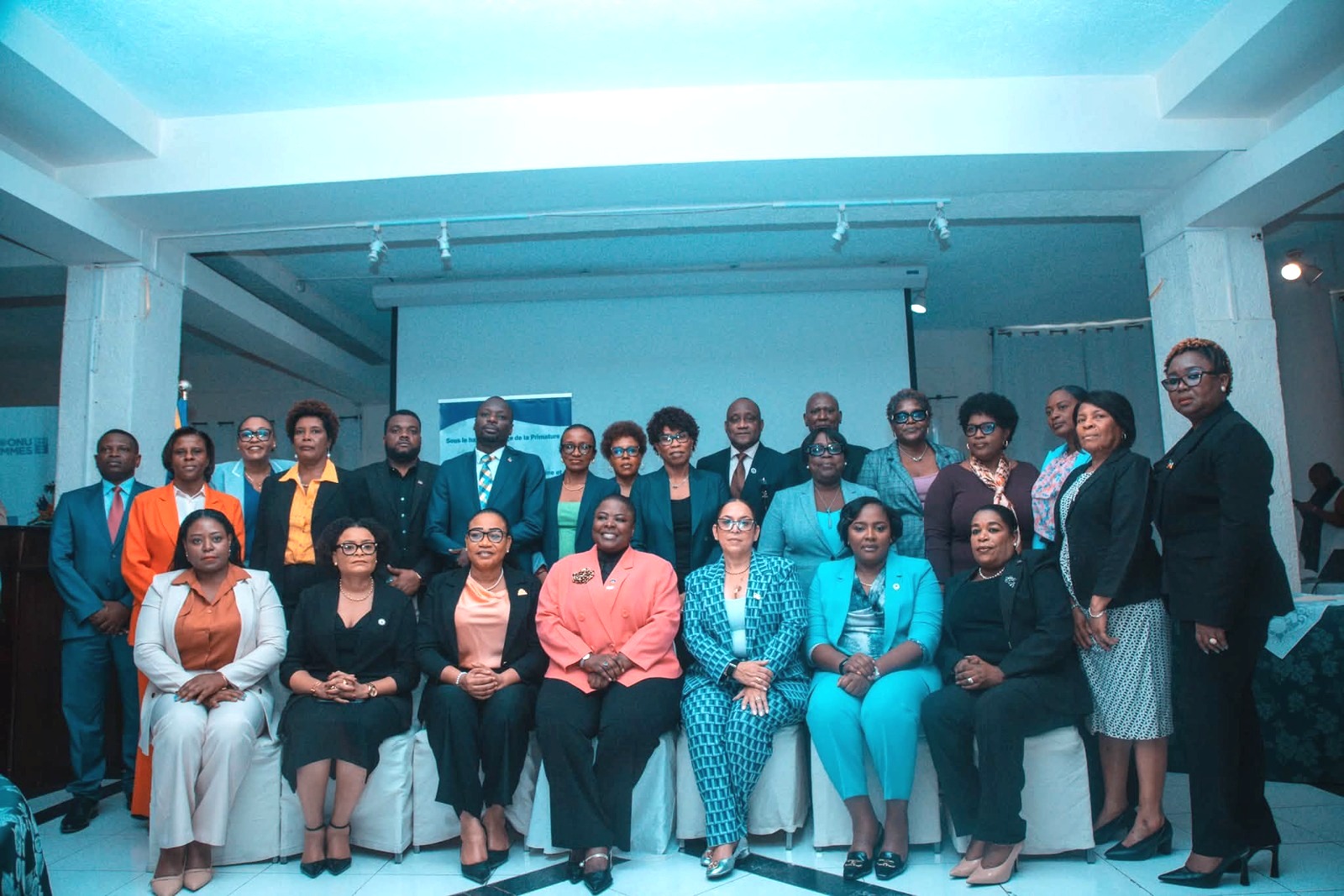
Illustration representing Haitian immigrants navigating legal and immigration challenges in the United States.

Migrant Challenges Facing the Haitian Community: Navigating Judicial Rulings and Media Scrutiny

By Marcnel Fleurcius
Founder & Editor-in-Chief, PolyvraNews
Jun 27, 2026

EVANSVILLE, INDIANA — Immigrant communities across the United States, particularly those from Haiti and Syria, are facing a period of heightened uncertainty following recent legal developments and renewed public debate over the nation’s immigration policies.

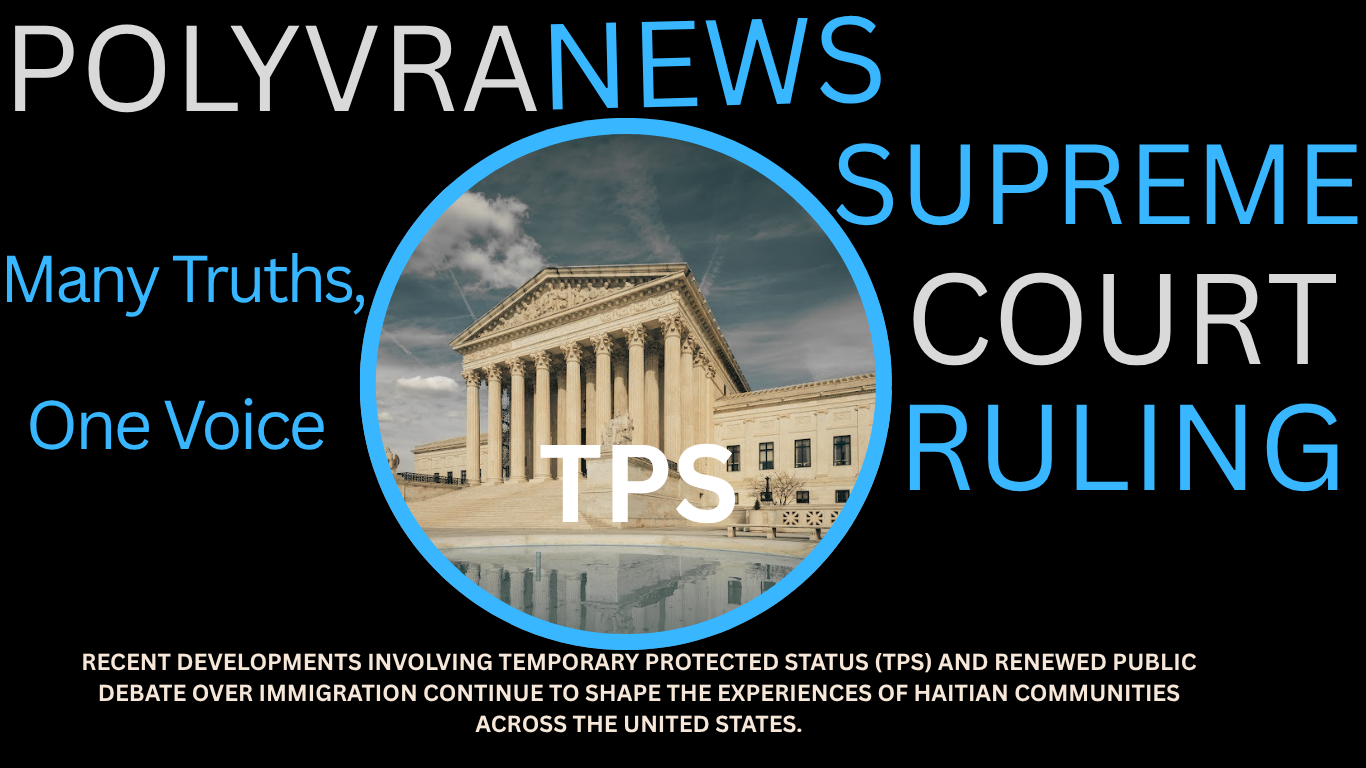
At the center of these concerns is the future of Temporary Protected Status (TPS), a humanitarian program that allows eligible nationals from designated countries experiencing armed conflict, environmental disasters, or other extraordinary conditions to live and work legally in the United States for a limited period.

Recent action by the U.S. Supreme Court has reaffirmed the executive branch’s authority to review, modify, or terminate TPS designations in accordance with federal immigration law. As a result, many beneficiaries now face uncertainty regarding their future legal status, employment authorization, and long-term stability.

Immigration attorneys and advocacy organizations continue to evaluate available legal options while advising affected individuals to remain informed and comply with all applicable immigration requirements.

At the same time, immigration has remained a prominent topic in American public discourse. During a recent broadcast, journalist and television commentator Megyn Kelly expressed strong views regarding immigration enforcement, including remarks referencing the return of undocumented immigrants to their countries of origin, including Haiti.

Her comments generated significant public discussion and prompted reactions from immigrant advocacy groups and members of the Haitian diaspora, some of whom expressed concern that highly visible public rhetoric may contribute to stigma, polarization, or misconceptions surrounding immigrant communities.

For PolyvraNews, these developments illustrate how immigration policy extends beyond legal proceedings alone. Judicial decisions, public debate, political discourse, and media narratives collectively influence the experiences of immigrant families, employers, community organizations, and local institutions throughout the United States.

As immigration policy continues to evolve, balanced reporting, factual accuracy, and responsible public dialogue remain essential to helping communities understand the legal landscape while recognizing the human impact behind policy decisions.

About PolyvraNews:
Many Truths, One Voice.
For inquiries, press releases, or to contact our newsroom, please email us at: contact@polyvranews.com
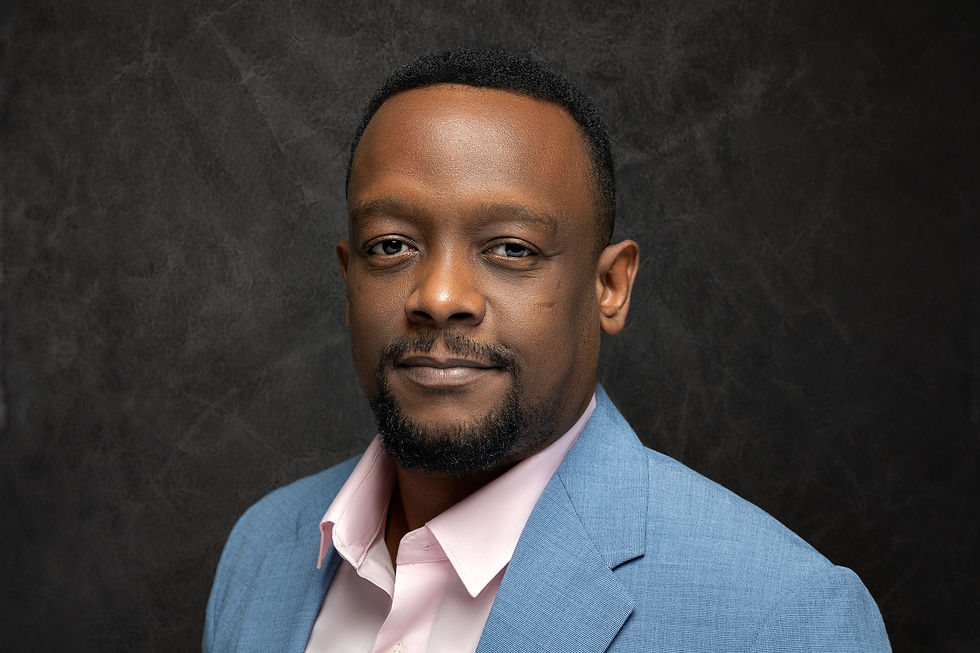
Carel Pedre following reports of his arrest in Florida and subsequent transfer to ICE custody as legal proceedings continue.

Haitian Media Figure Carel Pedre Transferred to ICE Facility Following Domestic Violence Arrest

PolyvraNews | contact@polyvranews.com
Slogan:“Many truths, one voice.”
Marcnel Fleurcius — Editor-in-Chief

December 26, 2025

Haitian media personality Carel Pedre, a native of Port-de-Paix, was arrested on Sunday, December 21, 2025, in Tamarac, Florida, by the Broward County Sheriff’s Office (BSO) on a domestic violence charge.December 26, 2025

Following his arrest, Pedre posted a $1,000 bond for his release from Broward County. However, authorities later identified an immigration issue, resulting in his transfer to an isolated ICE detention facility, referred to by some as “Alligator Alcatraz.” Pedre remains under suicide watch while his legal proceedings continue, and the public is closely following the case through the #FreeCarel campaign on social media. This report presents the verified information regarding his arrest, ICE transfer, media background, and legal status, providing PolyvraNews readers with a comprehensive overview of the situation.

Legal Details and Current Status

Pedre, 45, is facing a charge of “Touch or Strike/Battery – Domestic Violence,” classified under Florida Statute 784.03-1a1(HG). His arrest number is 112500721.

After being arrested in Tamarac, he was transported to the Broward County Main Jail in Fort Lauderdale and is currently in ICE custody. The $1,000 bond for the Broward County case was posted, but no bond has been set for the ICE matter.

A court hearing is scheduled for December 22, 2025, during which a judge will review the case, legal conditions, and the next procedural steps. Pedre remains under suicide watch while the legal process continues.

PolyvraNews reminds readers that an arrest does not constitute a conviction, and every defendant is presumed innocent until proven guilty in a court of law.

Transfer to ICE and Facility Background

The facility commonly referred to as “Alligator Alcatraz,” officially known as the South Florida Detention Facility, is a federal immigration detention center operated by the State of Florida with federal funding. It opened in July 2020, during the Trump administration, to house individuals without legal immigration status in the United States.

The facility has received criticism regarding its living conditions; however, ICE states that it operates in compliance with federal standards and that detainees are provided with appropriate conditions.

Media Background and Public Impact

Pedre is one of Haiti’s most recognized media personalities, with more than 25 years of experience in radio, television, and digital media. He has hosted popular programs such as Chokarella and the television show Digicel Stars, while building a large audience across social media platforms.

His arrest and transfer to ICE custody have generated significant attention within the Haitian community, both in the United States and throughout the diaspora. The hashtag #FreeCarel continues to circulate widely on social media, while his partner, Richelle Robinson, has made several indirect references to the situation through her social media accounts.

PolyvraNews will continue to closely monitor this case in accordance with professional journalistic standards and will provide updates as new verified information becomes available. The case remains ongoing.

Hashtags:
#PolyvraNews
#PolyvraReport
Website: www.polyvraNews.com

The Economic Paradox of the Haiti–Dominican Republic Frontier

Mass arrests, regular deportations, and a hardened military presence—these are the visible tools of current Dominican immigration policy. Yet, on the ground, the reality tells a different story.

The Dominican Republic is living through a clear contradiction: while authorities promise total control over immigration, migrants continue to cross the border daily—often under difficult conditions—in search of safety, work, and survival. This situation forces us to question not only the efficacy of current immigration policies but also the country’s profound economic dependence on foreign labor.

A Frontier in Flux

On both the northern and southern borders, the movement of migrants remains constant. Each week brings announcements of new operations, arrests, and deportations. However, local testimonies and field reports reveal a persistent flow; migration continues, sometimes more discreetly and sometimes more organized, but never fully halted.

The Dominican government cites intense migratory pressure, claiming that public health, education, and security systems are strained. Yet, this official stance clashes with the economic engine of the country. Key sectors—agriculture, construction, tourism, and services—remain heavily dependent on foreign labor, particularly from Haiti. This creates a “structural hypocrisy” where the state publicly condemns immigration while privately relying on it to sustain essential industries.

The Human Cost

For many migrants, the risks are higher than ever, but the motivation remains unchanged. Violence, insecurity, unemployment, and economic misery continue to drive the decision to cross the border.

We spoke with individuals on the ground who highlighted the human dimension of this crisis:

  • Jean, 29: “I know the risks, but I have no choice. At home, there is no work and no security. If I don’t come, I face hunger.”
  • Marie, mother of two: “They treat us like criminals. I am just trying to find work so my children can eat.”
  • Pedro, construction worker: “The bosses need us, but when there’s a raid, we are the ones who get taken.”

Looking Forward

Human rights organizations and analysts warn that repression without a sustainable strategy is leading to a humanitarian crisis. Military patrols and surprise raids have not stopped the flow of people; they have simply forced trafficking networks to adapt and move further into the shadows.

As the government continues to balance political rhetoric with economic reality, the fundamental question remains: Can this issue be solved through force alone? PolyvraNews will continue to monitor developments on the border as the situation evolves.


What are your thoughts on the border situation? Let us know in the comments below or join the conversation on our social media channels.

Note: Names of witnesses have been changed to protect their identities.


Keywords: #International #Immigration #Haiti #DominicanRepublic #BorderCrisis #MigrationPolicy #PolyvraNews #PolyvraReport