

POLYVRANEWS – MANY TRUTHS, ONE VOICE
Independent Media, Journalism, Polyvra News









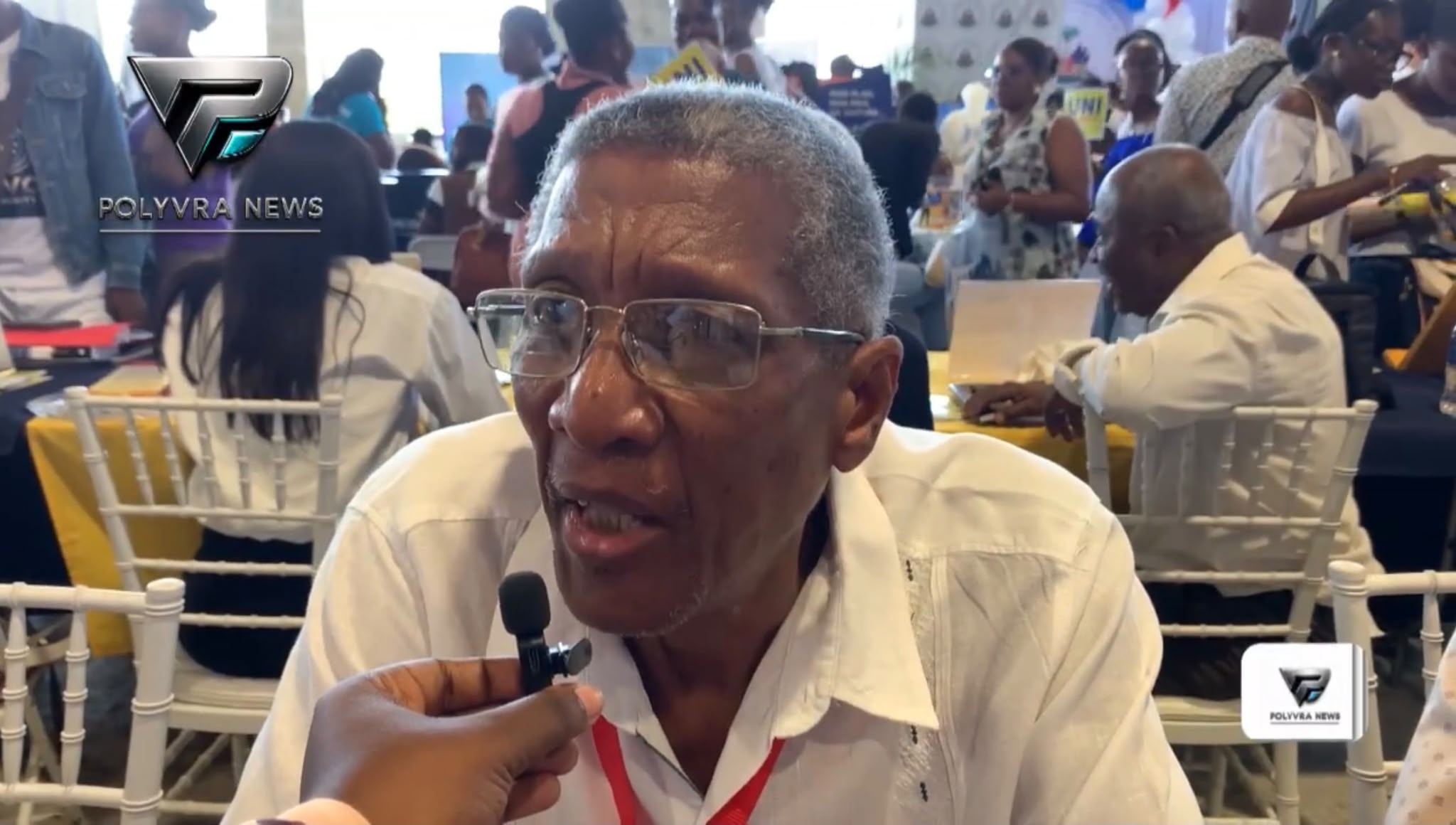
Livres en Folie 2026 : Claude Prépetit présente « Haïti, l’île aux contours mystérieux »
Pétion-Ville, Haïti – Créé en 1995, Livres en Folie est devenu au fil des années le plus grand rendez-vous littéraire du pays. Pour cette 32ᵉ édition, tenue le jeudi 4 juin 2026 à Pétion-Ville, l’événement a mis à la disposition du public 1 194 titres et réuni 126 auteurs lors des séances de signature.
Cette édition a également rendu hommage au grand écrivain haïtien René Depestre, figure majeure de la littérature francophone.
Parmi les auteurs présents, le géologue Claude Prépetit a présenté son ouvrage intitulé « Haïti, l’île aux contours mystérieux ». Selon lui, ce livre est le résultat d’une recherche personnelle qu’il souhaitait partager avec le grand public afin de mieux faire connaître certains aspects du territoire haïtien et de son histoire géologique.
L’auteur explique que cette publication véhicule un message particulier qu’il souhaite transmettre à la population, en invitant les lecteurs à porter un regard nouveau sur les richesses et les particularités du pays.
Profitant de cette rencontre avec le public, Claude Prépetit a également encouragé les jeunes générations à développer un plus grand attachement à leur patrimoine et à cultiver l’amour d’Haïti à travers la connaissance, la lecture et la recherche.
Reportage : Stevens Frantz Michael
Rédaction : PolyvraNews
www.polyvranews.com
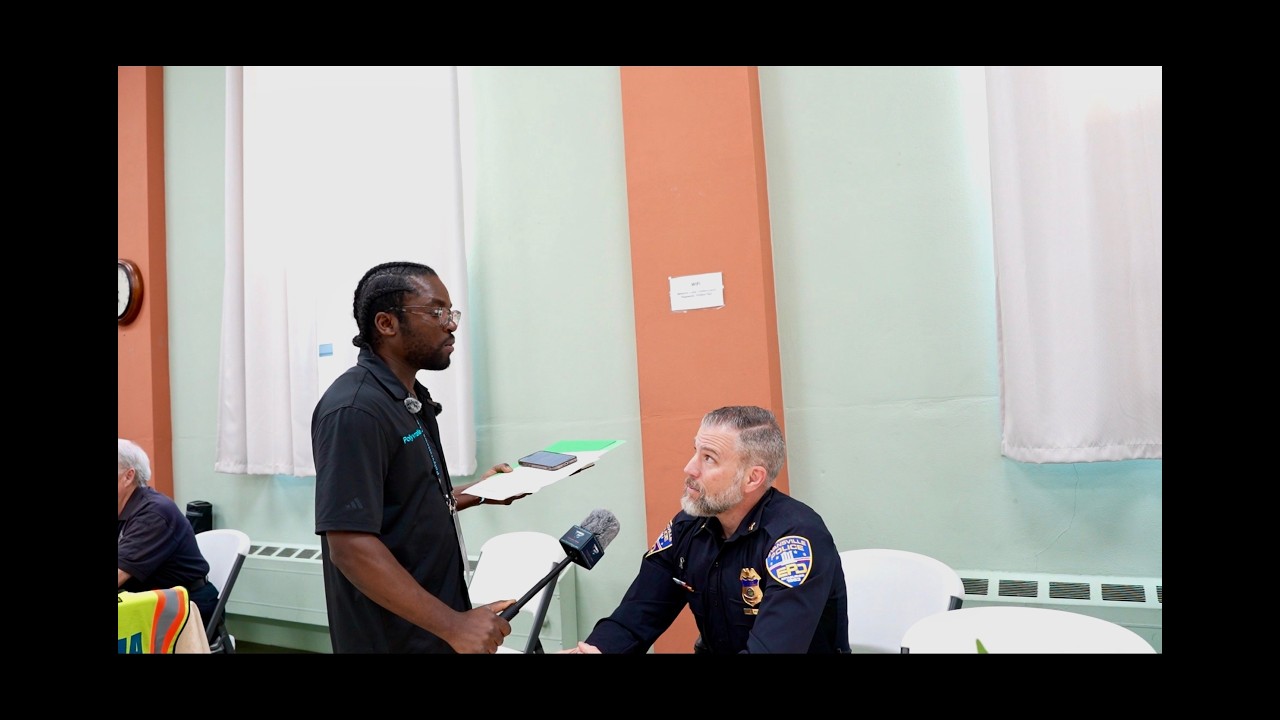
Mayor Stephanie Terry met with Evansville resident during a traveling city hall event
Mayor Stephanie Terry met with Evansville residents during a Traveling City Hall event. PolyvraNews was on the ground to capture key moments, questions, and community reactions.
Watch the Video
PolyvraNews | contact@polyvranews.com
Slogan:“Many truths, one voice.”
Marcnel Fleurcius — Editor-in-Chief

André ‘Dadou’ Pasquet, Titan of Haitian Music, Has Passed Away
Co-founder of Magnum Band, former member of Tabou Combo, and one of Haiti’s most beloved musicians, Dadou Pasquet died peacefully at the age of 72 after a long illness, leaving behind a legacy etched into the very heartbeat of Haitian music.
Haiti and its diaspora woke this morning to news that left no heart untouched. André “Dadou” Pasquet, one of the most gifted and irreplaceable figures in the history of Haitian music, has passed away. His family confirmed the news, describing his final moments as peaceful — surrounded by those who loved him. He was 72 years old.
Born on August 19, 1953, in Port-au-Prince, Dadou grew up in a home where music was not background — it was air. His uncles, accomplished musicians in their own right, placed a guitar in his hands while he was still a child. That instrument would become, for the rest of his life, an extension of himself. By his early teens, he had already left Haiti for New York, where he began performing professionally with a group called Tropicale.
“Every 50 years, Haiti gives us one of these. It is truly extraordinary that we have had the chance to live in the same period as an artist like this.”— Fabrice Rouzier, musician and founder of Mizik Mizik
The early 1970s brought Dadou to Tabou Combo, one of Haiti’s most legendary Konpa formations. There, alongside Roger “Shoubou” Eugène and Yvon “Biassou” Mondésir, he helped forge one of the most celebrated vocal trios in Haitian music history. As guitarist, arranger, and composer, he contributed to four landmark albums — Sugar Cane, Respect, 8th Sacrament, and The Masters — helping push Konpa onto the world stage with an energy and sophistication it had never known before.
But it was on June 24, 1976, in the heart of Miami, that Dadou made the move that would define his career and reshape Haitian music forever. Together with his brother Claude “Tico” Pasquet, he founded Magnum Band — a group that blended traditional Konpa with jazz, funk, soul, blues, reggae, and Caribbean fusion into something the world had simply not heard before. They called themselves “The Only Difference.” The name was honest.
A life in music
1953Born August 19 in Port-au-Prince, Haiti — raised in a family of musicians
Early 70sJoins Tabou Combo in New York — performs on four landmark albums
1976Co-founds Magnum Band in Miami with brother Tico — “The Only Difference”
1980Magnum Band releases Chèche La Vie, shaping the group’s international identity
1982Releases Liberté — an anthem for Haiti’s boat people and the spirit of exile
1986Afrika — a landmark tribute blending Haitian rhythms with pan-African themes
1992Live at Berklee showcases his extraordinary improvisational range to global audiences
2014Radio Télévision Caraïbes honors Magnum Band with the Honneur et Mérite award
2024Generations, a final album collaboration with Kahmik, released to the world
2025Passes away peacefully on November 22, in Miami, Florida — age 72
Among his most iconic songs — Experience, Jehovah, Paka Pala, Liberté, Se Vérité — each one carries an emotional weight that words alone cannot explain. His 1982 anthem Liberté became something far greater than a song. It became a document of a generation — a meditation on exile, migration, and the devastating fate of Haiti’s so-called boat people fleeing the Duvalier dictatorship. Grammy Award-winning artist Wyclef Jean once compared him to Carlos Santana, saying plainly: “You cannot be a guitar player and know Santana but not know Pasquet.”
Those who shared the stage with him speak of more than technical brilliance. They speak of humility. Of a man who could make an entire room weep in one moment and dance the next — not through spectacle, but through sincerity. Younger generations of musicians called him “the silent professor,” because his music taught what words never could. He was, in every sense, a cultural ambassador who carried Haiti wherever he went — from New York and Miami to Paris, Montreal, Guadeloupe, and beyond.
The Economic Paradox of the Haiti–Dominican Republic Frontier
Mass arrests, regular deportations, and a hardened military presence—these are the visible tools of current Dominican immigration policy. Yet, on the ground, the reality tells a different story.
The Dominican Republic is living through a clear contradiction: while authorities promise total control over immigration, migrants continue to cross the border daily—often under difficult conditions—in search of safety, work, and survival. This situation forces us to question not only the efficacy of current immigration policies but also the country’s profound economic dependence on foreign labor.
A Frontier in Flux
On both the northern and southern borders, the movement of migrants remains constant. Each week brings announcements of new operations, arrests, and deportations. However, local testimonies and field reports reveal a persistent flow; migration continues, sometimes more discreetly and sometimes more organized, but never fully halted.
The Dominican government cites intense migratory pressure, claiming that public health, education, and security systems are strained. Yet, this official stance clashes with the economic engine of the country. Key sectors—agriculture, construction, tourism, and services—remain heavily dependent on foreign labor, particularly from Haiti. This creates a “structural hypocrisy” where the state publicly condemns immigration while privately relying on it to sustain essential industries.
The Human Cost
For many migrants, the risks are higher than ever, but the motivation remains unchanged. Violence, insecurity, unemployment, and economic misery continue to drive the decision to cross the border.
We spoke with individuals on the ground who highlighted the human dimension of this crisis:
- Jean, 29: “I know the risks, but I have no choice. At home, there is no work and no security. If I don’t come, I face hunger.”
- Marie, mother of two: “They treat us like criminals. I am just trying to find work so my children can eat.”
- Pedro, construction worker: “The bosses need us, but when there’s a raid, we are the ones who get taken.”
Looking Forward
Human rights organizations and analysts warn that repression without a sustainable strategy is leading to a humanitarian crisis. Military patrols and surprise raids have not stopped the flow of people; they have simply forced trafficking networks to adapt and move further into the shadows.
As the government continues to balance political rhetoric with economic reality, the fundamental question remains: Can this issue be solved through force alone? PolyvraNews will continue to monitor developments on the border as the situation evolves.
What are your thoughts on the border situation? Let us know in the comments below or join the conversation on our social media channels.
Note: Names of witnesses have been changed to protect their identities.
Keywords: #International #Immigration #Haiti #DominicanRepublic #BorderCrisis #MigrationPolicy #PolyvraNews #PolyvraReport
Hello world!
Welcome to WordPress. This is your first post. Edit or delete it, then start writing!