
Trump tariffs Iran war global economy friction points reached a critical threshold this Saturday, as new industrial levies and military skirmishes drove international bourses into unprecedented volatility. The sudden convergence of protectionist trade mandates from Washington and intense kinetic exchanges in the Strait of Hormuz has sent crude oil prices soaring to 100 dollars per barrel, threatening to spark a global technical recession. Financial structures across the Western hemisphere are mobilizing safety protocols as supply chains face dual-axis disruption from maritime blockades and statutory cross-border tariffs. Industrial operators indicate that structural trade frameworks are undergoing a severe systemic realignment, shifting the global macroeconomic outlook into highly restrictive territory.
The international community is witnessing a structural decomposition of multilateral trade and security architectures. The aggressive deployment of unyielding customs enforcement mechanisms by the United States, running parallel to raw kinetic warfare in the Middle East, has fundamentally compromised contemporary logistical networks. Industrial manufacturing entities are forced to re-evaluate their cross-border dependencies as shipping channels are closed off and protective legal statutes are triggered simultaneously.
The Battle for the Strait of Hormuz and the 100-Dollar Crude Reality
The primary operational theater driving this structural instability is situated within the vital maritime corridors of the Persian Gulf and the Red Sea. Following thirteen consecutive nights of intense tactical airstrikes executed by United States naval assets against command networks and drone fabrication sites inside western Iran, Tehran has deployed a highly disruptive asymmetric counter-offensive. Yemen-based Houthi forces, operating under the logistical coordination of the Islamic Revolutionary Guard Corps (IRGC), launched coordinated cruise missile salvos targeting commercial tankers in the southern Red Sea corridors, severely damaging an administrative fuel transport vessel and forcing the immediate re-routing of global maritime freight away from the Suez Canal toward the Cape of Good Hope.
This abrupt disruption of vital global supply lanes ignited an instantaneous wave of panic across international commodity exchanges, rapidly lifting the spot price of Brent crude oil to the psychological benchmark of 100 dollars per barrel. Simultaneously, Iranian naval units expanded their enforcement parameters within the Strait of Hormuz, intercepting multiple Western-flagged container vessels under the legislative pretense of maritime boundary violations. With over one-fifth of global petroleum consumption transiting through this narrow maritime chokepoint, the partial blockade has triggered widespread inflationary warnings across major European and Asian manufacturing hubs. Central banks on both continents are reportedly reviewing emergency monetary tightening procedures to suppress domestic price increases, further dampening industrial capital expenditure.
The White House Customs Offensive: Legal Mechanisms of the New Tariff Era
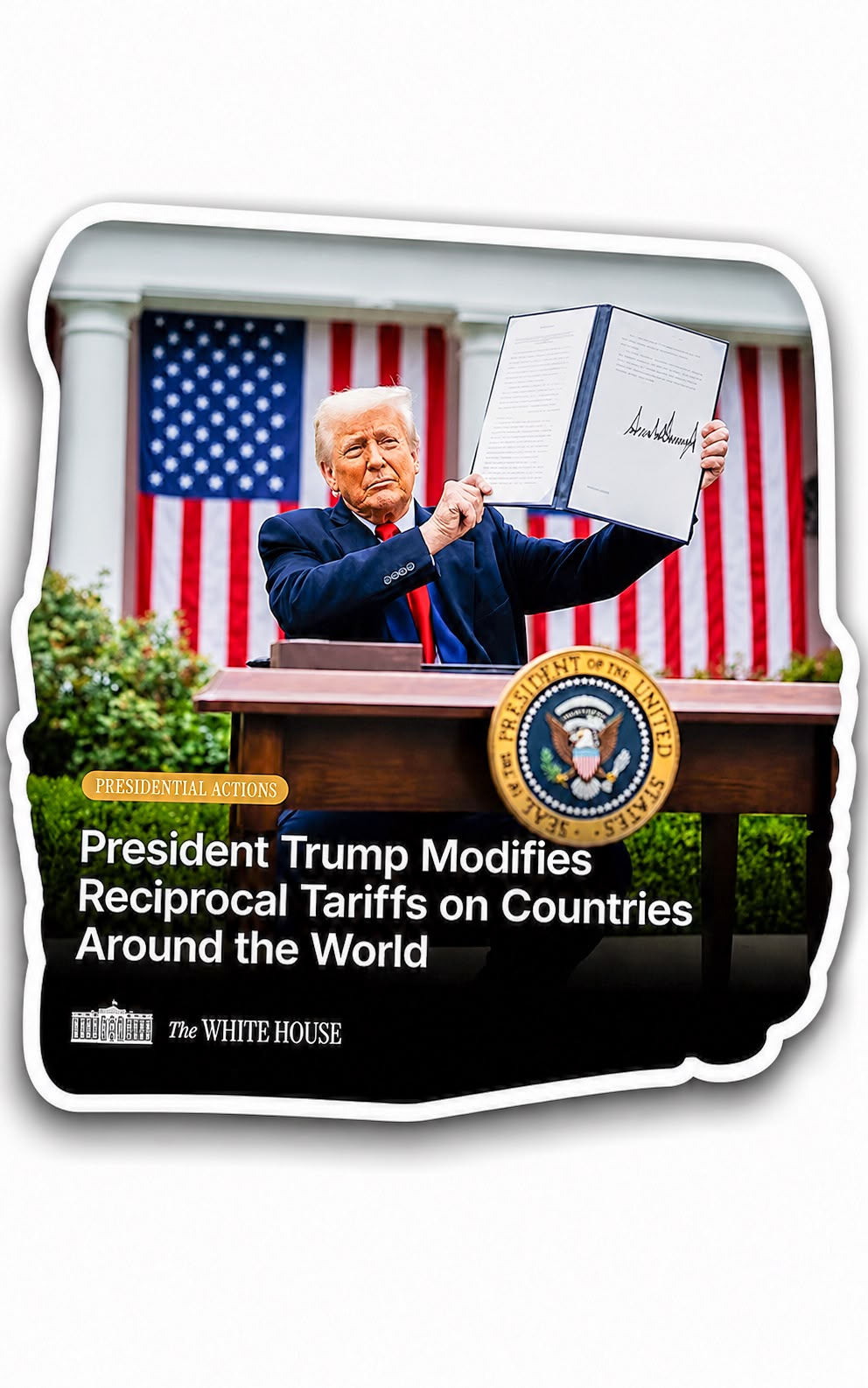
Concurrently with the escalating military crisis in the Middle East, the United States administration has formalized a sweeping restructuring of its international import architecture. Effective as of midnight, the Office of the United States Trade Representative (USTR) has officially implemented permanent, aggressive tariff schedules designed to completely replace expired transitional customs agreements. The new statutory framework levies a universal, non-negotiable 10% ad valorem duty on all industrial goods imported from the European Union, Canada, Mexico, and India. Furthermore, Washington has instituted a highly restrictive 12.5% customs tariff targeting manufacturing exports originating from China, Japan, and South Korea.
To circumvent the lengthy multilateral arbitration procedures of the World Trade Organization (OMC), the administration invoked specific statutory powers under the Trade Act of 1974, asserting that the targeted sovereign entities have failed to enforce adequate regulatory oversight against forced labor within their respective industrial supply lines. This heavy-handed administrative justification has triggered widespread condemnation across international capitals. From Tokyo to Canberra, trade ministries have formally rejected the structural basis of the tariffs, characterising them as thinly veiled protectionism that explicitly undermines international labor conventions. European Union trade emissaries and the Canadian Department of Finance have announced that comprehensive retaliatory tariff packages are currently undergoing urgent administrative drafting, threatening to expand the dispute into a systemic, bilateral economic embargo.
Trump tariffs Iran war global economy: The geopolitical impasse
On the diplomatic stage, the international system appears to have descended into structural gridlock. The United States executive branch issued an unyielding declaration affirming that American military assets remain fully deployed and operationally prepared (“locked and loaded”) to protect commercial shipping lanes, while simultaneously offering to enter into direct, high-pressure diplomatic negotiations with the leadership in Tehran. However, the administrative warning extended far beyond the immediate Middle Eastern theater, explicitly referencing the strategic positions of Moscow and Beijing.
The White House formally warned both the Russian Federation and the People’s Republic of China against extending any technical, military, or advanced logistical assistance to the Iranian state apparatus. The executive statement reminded international monitors that Chinese administrative leaders had previously committed to preventing the flow of military-grade tech to Tehran, emphasizing that this compliance mandate extends directly to private enterprise operating within Chinese technological zones. This aggressive diplomatic posture aims to isolate the Iranian economy entirely, even as Tehran expands its drone deployments against coalition logistical centers across Jordan, Kuwait, and Bahrain. As cross-retaliatory actions intensify, Western embassies have initiated voluntary evacuation protocols for non-essential diplomatic staff within the Gulf region, signaling that civil aviation windows may contract sharply.
Systemic Transmission Channels: Finance, Gold, and Industrial Stagflation
The profound instability radiating from these twin crises is forcing a fundamental reallocation of capital across the international banking sector, as validated by global financial monitors. Facing severe inflationary pressures from the 100-dollar oil benchmark and the immediate implementation of the import taxes, global institutional investors have initiated a historic flight toward safe-haven assets. Spot gold prices surged to an unprecedented record high, consolidating firmly above the 4,000 dollars per ounce threshold, illustrating a profound systemic distrust of fiat currencies and equity portfolios during periods of combined military and economic warfare.
Western manufacturing conglomerates, heavily dependent on precision electronic components from East Asia and raw material inputs from transatlantic partners, are preparing for an immediate, structural escalation in their baseline operational expenses. Macroeconomic analysts warn that these domestic import levies will not merely penalize foreign production entities; rather, the associated fiscal burdens will be transmitted directly to Western consumers via higher retail price indices. This structural dynamic significantly increases the immediate probability of deep technical stagflation within the United States market as mid-term electoral cycles approach.
The Dissolution of the Multilateral Trading Order
The structural intersection of the trade wars and the Middle Eastern kinetic theater indicates that the multilateral framework established during the late twentieth century is rapidly dissolving under the pressure of bloc politics and unyielding protectionism. Direct economic and military confrontation has effectively bypassed the legal arbitration mechanisms of global institutions, leaving emerging markets and civilian populations directly exposed to a severe financial storm that lies entirely beyond their administrative control.
Thank you for choosing PolyvraNews to analyze the complex international forces shaping our contemporary world. We remain dedicated to executing our coverage in accordance with our five institutional core pillars: Honesty, Intelligence, Discipline, Courage, and Compassion, delivering unyielding, unfiltered, and deeply investigated journalism. To monitor real-time changes across the major international financial markets, currency indices, and our dedicated national sports news hub, visit our official digital platform at polyvranews.com. Stay strong, stay vigilant, and we shall meet in our next edition for an equally sharp breakdown of global events. Farewell.
EDITOR-IN-CHIEF: MARCNEL FLEURCIUS
IMAGES, REPORTAGE, AND EDITING: Roberto
INTERNATIONAL PRODUCTION: POLYVRANEWS LLC
About PolyvraNews:
Many Truths, One Voice.
For inquiries, press releases, or to contact our newsroom, please email us at: contact@polyvranews.com
The ongoing military escalation with Iran, coupled with the ramifications of Trump’s tariffs, has plunged the global economy into unprecedented turmoil. These developments highlight the interconnectedness of geopolitical tensions and economic stability, underscoring the urgent need for cohesive international strategies. As nations grapple with the fallout, the stability of the global market remains in jeopardy, necessitating vigilant observation and informed discourse. PolyvraNews remains committed to providing in-depth analysis and reporting on these critical issues.